01
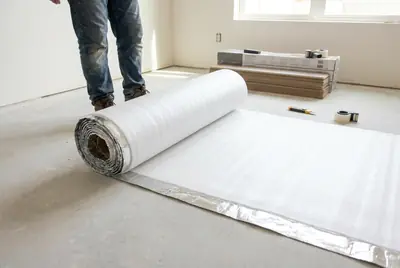
Underlayment and vapor film
The quiet half of a quiet floor: foam or fiber underlay with taped seams, plus a moisture film wherever concrete sits below.

A straight, quiet laminate floor in City Park takes one measured visit and one laying day. The Denver crew brings everything down to the last threshold.
Measured square-foot quote, free, answered within one business day.
Ready to transform your floors? Let's dive in.
You've probably walked on it a million times without even thinking about it. It's that dependable surface underfoot, the unsung hero of busy households. Now, imagine that surface looking fantastic, feeling great, and holding up against everything life throws at it. This is about making that happen for your place in the beautiful City Park area of Denver, Colorado.
Think about your current floors. Are they a bit tired, maybe scratched up from countless playful romps or the daily hustle? Perhaps you're dreaming of something that looks super stylish but won't break the bank or require a Herculean effort to maintain. That's precisely where the wonders of these contemporary plank installations come into play. They offer a seriously appealing blend of good looks and tough performance.
This approach to covering your home's base level is a real game-changer for homeowners everywhere. It's designed to mimic the natural beauty of wood or stone but comes with a whole host of other advantages you'll truly appreciate. You get that high-end aesthetic without the associated high-end price tag or the finicky care instructions often associated with genuine hardwood.
Now, let's talk tough. You need floors that can handle spilled juice, muddy paw prints, and maybe even the occasional dropped toy. This kind of flooring is built for exactly that kind of action. Its layered construction means it's incredibly resistant to scratches, dents, and fading. So, even after years of wear and tear in a lively household, it'll still look pretty darn good.
This makes it an ideal choice for high-traffic areas like living rooms, hallways, and even kitchens where spills are practically a guarantee. You can feel confident letting kids and pets roam freely without constantly worrying about every little scuff mark.
Beyond the brawn, there's the beauty. You can find these plank systems in an astonishing variety of styles, colors, and textures. Whether you're after the rustic charm of reclaimed barnwood, the sleek sophistication of dark oak, or the earthy feel of natural stone, there's a perfect match waiting for you. This allows you to really dial in the exact look and feel you want for your abode.
You can achieve a truly cohesive design throughout your home, or create distinct moods in different rooms. Imagine stepping into a living space with wide, light-colored planks that make the room feel airy and spacious. Then, picture your bedroom boasting darker, richer tones for a cozier vibe. The possibilities are pretty much endless.
Let's face it, nobody wants to spend their weekends scrubbing floors. One of the biggest draws of these modern surface coverings is how incredibly simple they are to clean. A quick sweep or a light mop is usually all it takes to keep them looking spotless. No special polishes or complicated waxing routines required here.
This low-maintenance aspect is a huge win, especially for busy families or anyone who simply prefers to spend their free time doing other things. You get to enjoy beautiful floors without the constant chore of intensive upkeep.
You might be nodding along, thinking "Yeah, my floors could use some help," but how do you know for sure it's time for a change? Well, there are a few tell-tale signs that signal your current flooring has seen better days.
First off, look for the obvious. Are there deep scratches that you can't ignore? Are there sections where the finish has completely worn away, revealing dull patches? Maybe there are stubborn stains that just won't come out, no matter how hard you try. These are clear indicators that your current setup is reaching the end of its road.
And don't forget about those annoying little chips or lifting edges. These aren't just unsightly they can also be a tripping hazard, which is definitely not ideal for safety.
Sometimes, it's not about damage, but about style. Trends change, and what once looked cutting-edge can start to feel a bit dated after a decade or two. If your floors are making your entire home feel stuck in the past, a refresh could be exactly what you need to bring everything up to speed.
A modern surface installation can dramatically update the look and feel of your entire house, making it feel more contemporary and inviting. It's one of the most impactful ways to boost your home's overall appeal.
Thinking of selling your house in the Denver metro area, perhaps in one of the 80205 or 80206 ZIP codes? Buyers often look at flooring as a major selling point, and outdated or damaged floors can be a significant turn-off. Investing in new plank flooring can significantly increase your home's marketability and potentially fetch a higher price.
Even if you're not planning to sell right away, upgrading your floors can be a great way to invest in your home's value and your own enjoyment of the space for years to come.
Choosing the right kind of plank flooring involves understanding a few key features. It's not just about picking a pretty color; there are some technical bits that make a big difference in the long run.
Most of these products have a robust core, often made from high-density fiberboard (HDF) or a similar material. This core provides the structural integrity and contributes significantly to the flooring's resistance to impact and moisture. A denser, more stable core usually means a more durable and longer-lasting product.
Then, there's the decorative layer, which is where all the visual magic happens, printed with incredibly realistic patterns. On top of that sits a protective wear layer, the superhero that shields against scratches, stains, and fading. The thickness and quality of this wear layer are critical for longevity, especially in a busy household environment.
When you're looking at different options, pay close attention to the thickness of the planks and, more importantly, the wear layer. Wear layers are typically measured in mils. For residential use, a wear layer of 6 mils is generally considered a minimum, but aiming for 10-12 mils or higher is recommended for areas with heavy foot traffic or pets.
Thicker planks can sometimes feel more substantial underfoot, but the wear layer's performance is usually the more critical factor for preventing damage and maintaining appearance over time. This is where you get real bang for your buck.
While many modern plank floors are highly water-resistant, it's essential to understand the nuances. Some are designed to be completely waterproof, which is fantastic for bathrooms, kitchens, and basements prone to moisture. Others offer excellent water resistance but might not be ideal for areas that experience standing water.
Always check the manufacturer's specifications regarding water exposure. If you have young kids or a dog that's still being house-trained, truly waterproof options are going to provide a lot more peace of mind.
So, you've picked out your dream floors. Now comes the part where those planks go from boxes to beautiful surfaces. The installation itself is a crucial step, and understanding what's involved can help you feel more confident.
Before any new planks can be laid, your existing subfloor needs to be in tip-top shape. This means it needs to be clean, dry, and level. Any unevenness or debris can lead to issues down the line, like squeaky spots or planks not locking together properly.
Often, a professional installer will need to inspect your current floor. They might need to do some minor repairs, like filling low spots or removing old adhesive, to ensure a perfect base for the new material. This prep work is absolutely vital for a flawless finish.
One of the reasons these installations have become so popular is the ease of the click-lock system. Most planks feature interlocking edges that snap together securely without the need for nails or glue in many cases. This creates a strong, floating floor that can expand and contract slightly with temperature changes.
The installer will typically start along one wall, meticulously locking each plank to the next. They'll use specialized tools to ensure a tight fit, creating a seamless surface that looks like it's been there forever.
Once the main area is covered, the installer will focus on the edges and transitions. This involves fitting the flooring snugly against walls, using baseboards or quarter-round molding to cover the small expansion gap. This gap is essential, as it allows the floor to move naturally without buckling.
Transitions to other flooring types, like tile or carpet, are also handled with care. Professional installers use specific transition strips to create a smooth, safe, and visually appealing change from one surface to another. This attention to detail makes all the difference.
You might be thinking, "Can I just do this myself?" And sure, for some folks, DIY is the way to go. But when it comes to something as impactful as your home's flooring, especially in a unique neighborhood like City Park, bringing in the pros really pays off.
Professionals have seen it all. They understand the nuances of different subfloors, the best ways to handle tricky layouts, and how to achieve that perfect, seamless look. Their experience means they can anticipate and solve problems before they even become issues, saving you time and potential headaches.
They also have the right tools and equipment, which makes the job go faster and ensures a higher quality result than you might achieve on your own. This lets you relax, knowing the job is in capable hands.
Let's be real, installing flooring is a physically demanding job. It involves a lot of bending, cutting, and heavy lifting. Hiring a local team frees you up to focus on other things, whether it's work, family, or just enjoying your downtime.
Plus, a professional installation is usually much quicker. They can often complete a job in a day or two that might take a DIYer a full weekend or more, and with far less frustration involved.
A professionally installed floor is more likely to look great and perform well for years to come. Proper installation prevents common problems like gaps, unevenness, or premature wear, which can shorten the lifespan of your flooring. This means your investment will truly last.
Ultimately, getting it done right the first time by local experts is an investment in your home's value and your own peace of mind. You get that beautiful, durable surface you've always wanted, installed with precision and care.
You've got a fantastic opportunity to enhance your living space in City Park, Colorado. Imagine the difference new, stylish, and incredibly practical plank flooring could make. It's more than just covering your floors; it's about upgrading your lifestyle and adding lasting value to your home.
Now's the perfect moment to explore what's possible. You can get a clear picture of your options and costs without any pressure. Why not take the first step towards those dream floors? You can easily get a no-obligation estimate tailored specifically for your home.
Every laminate plank carries an abrasion class. It says more about how the floor will age than the photo on the box does, so we quote with it, not around it.
| Rating | Where it belongs | What it takes in stride |
|---|---|---|
| AC3 | Bedrooms, closets, home offices with a chair mat | Everyday footsteps, furniture on felt pads, the vacuum on Sundays |
| AC4 | Living rooms, kitchens, hallways, stair landings | Kids, dogs, dropped keys, the daily route between couch and fridge |
| AC5 | Entryways, home businesses, rentals, busy stairs | Grit walked in from outside, rolling office chairs, tenants you never meet |
AC1 and AC2 exist too; we simply do not lay them, because the savings at the register come back as dull traffic lanes within a couple of years.
We install laminate all day, and it is still not the answer to every room. Here is the comparison we walk through at the kitchen table, with nothing rounded in our favor.
| Laminate | Vinyl plank | |
|---|---|---|
| Water | Modern boards shrug off spills that get wiped up; standing water at a leaky dishwasher is still its weak spot. | Fully waterproof through the core, which is why laundry rooms and full bathrooms lean vinyl. |
| Comfort and sound | Stiffer core, more solid underfoot, and quieter than its reputation once a proper underlay goes in. | Softer and warmer to bare feet, but thin planks telegraph every dip in the subfloor. |
| Price | More floor per dollar at the same thickness, and the realistic wood looks start cheaper. | Comparable at the low end; the rigid-core boards worth owning cost noticeably more. |
| Repair | A click-lock plank can be swapped; keep one spare box in the garage and a scratch is an afternoon fix. | Glued-down planks mean solvent and patience; click vinyl swaps much like laminate does. |
If your project reads vinyl after that table, we will say so during the measure and you keep the comparison for free.
01
The quiet half of a quiet floor: foam or fiber underlay with taped seams, plus a moisture film wherever concrete sits below.
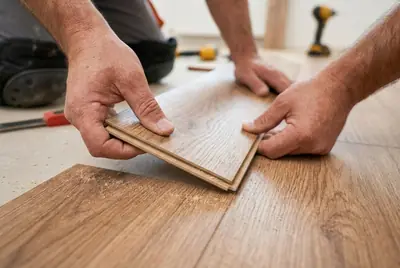
02
Planks angled, clicked and tapped home with staggered joints, so the sight line down the room stays dead straight.
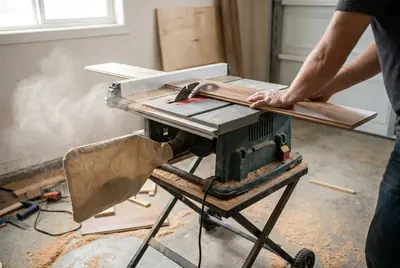
03
Door casings undercut so boards slide beneath, pipes ringed with collars, last rows ripped to width instead of forced.
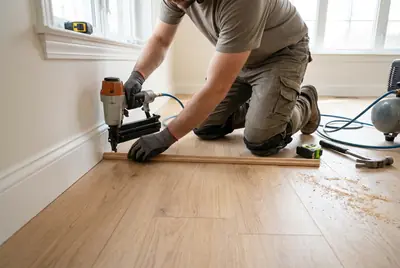
04
The expansion gap disappears behind clean trim, mitered at the corners and caulked where the wall waves.
05
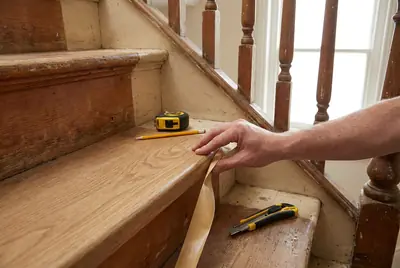
Tread and riser kits with proper nosing, glued and screwed, because a stair takes more abuse than any floor below it.
06
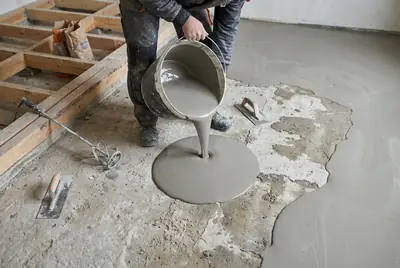
Grinding the high spots and pouring self-leveler into the low ones before a single plank leaves its box.
Laminate floats. It is not nailed and not glued, which is exactly why it goes down fast, and exactly why it copies every flaw underneath. A hollow click under your heel, a seam that opens by the window, a plank that rocks by the couch: nine times out of ten the story started below the boards.
So the level comes out before the saw does. We check flatness against the 3/16 inch in 10 feet rule, grind ridges, fill dips with self-leveling compound and let it cure. The underlay then earns its keep twice over, softening footfall sound for the room below and evening out what the compound did not catch.
The last quiet detail is the gap you will never see. Laminate grows and shrinks with the seasons, so every wall, pipe and doorway keeps a small expansion space, and long open stretches get a transition profile. Skip those and summer humidity will fold a hallway into a tent; leave them and the floor stays flat for decades. They are in every quote we write, not on the options list.
A fitter walks the rooms with a laser measure, checks the subfloor and leaves you a square-foot price on paper. No estimate ranges that grow later.
The planks acclimate in the rooms for about 48 hours while we pull the old covering and level whatever the laser flagged.
Underlay, film, then row after row, clicked tight and cut clean at every casing. Most single floors go down between breakfast and dinner.
Baseboards, thresholds, a vacuum pass and a walk through every room together. You keep the leftover planks for future repairs.
| Line item | Usual range | What sits inside it |
|---|---|---|
| Laminate installation, per sqft | $2.50 - $4.50 | Labor for click-lock laying with standard underlay included. |
| Old floor removal, per sqft | $0.60 - $1.50 | Carpet pulls out cheap; glued wood and tile sit at the top end. |
| Subfloor leveling, per sqft treated | $1.00 - $3.00 | Only the flagged low spots pay, never the whole room. |
| Stairs, per step | $45 - $95 | Tread, riser and nosing, fitted, glued and screwed. |
| Baseboard and quarter round, per linear foot | $2.00 - $4.00 | Supplied primed or color-matched to the boards. |
| Small-job minimum | $350 | Keeps a single hallway or one bedroom fair for both sides. |
The planks themselves ride on top of these figures and depend on the board you fall for; the written quote lists them on their own line, so you can swap styles without redoing the math.
Bedrooms, living rooms, hallways and home offices are laminate country, no caveats: warm looks, an AC rating matched to the traffic and a surface that forgives chair legs and dog claws better than the veneer floors it imitates.
Kitchens work well with a water-resistant board, sealed edges and a mat where the sink drips. Full bathrooms are the one room where we tap the brakes: daily steam and puddled water shorten any laminate's life, and we would rather point you to a different surface there than sell you a floor with a countdown on it. Powder rooms, with no tub in sight, are fine.
The moment the last plank clicks. A floating floor needs no glue to cure, so the couch returns the same evening and the bedroom sleeps in its own bed that night. Heavy aquariums and pianos get felt pads and a second pair of hands, not a waiting period.
Planks leave a cold warehouse and arrive in your heated rooms around City Park. Two days of acclimating lets them finish their expanding before they are locked together, instead of after, which is how gaps and peaks are born.
Usually, and it saves the demolition line on the quote. The grout lines disappear under the underlay if the tile is flat and sound. Over carpet the answer is always no; the padding flexes and the locks work themselves open.
We work room by room, shifting pieces to the finished side as the floor advances, so nobody rents a storage unit for a two-day job. Emptying closets and small breakables ahead of us is the one favor we ask.
No. A flat subfloor with an 8 mm AC4 board outlives a wavy one with 12 mm every time. Thickness buys sound and feel; the AC rating buys longevity; the leveling buys both. We spend your budget in that order.
You hand us the spare box we left behind. A click-lock floor unzips to the wounded plank and closes again, and a repair like that is an afternoon, not a renovation.
Terrain up here, coverage down there: every community a fitter reaches from this base is linked further down the page.
Somewhere under that carpet is a flat, quiet floor waiting to happen.
Price my floor