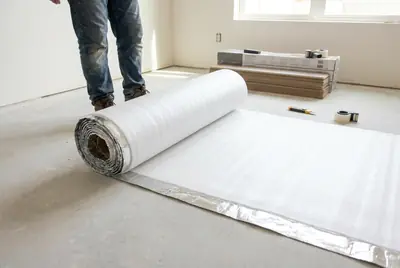
01
Underlayment and vapor film
The quiet half of a quiet floor: foam or fiber underlay with taped seams, plus a moisture film wherever concrete sits below.

Our Natural Bridge fitters level, lay and trim click-lock laminate across Jefferson County, and the square-foot price is on paper before the first box opens.
Measured square-foot quote, free, answered within one business day.
Are you tired of staring at worn out boards in your home? Luckily, a fresh surface upgrade gives you total peace of mind and heavy durability.
Perhaps you wonder what makes this synthetic wood product so special for local homes. This clever material uses a high density fiberboard core topped with a photographic applique layer. Consequently, you get the gorgeous look of exotic hardwood without paying a fortune.
Meanwhile, the tough resin coating protects against scratches from pets and heavy boots. This means you can host family gatherings without worrying about permanent floor damage.
Aside from looking amazing, these planks resist moisture quite well when sealed correctly. Therefore, installing them in high traffic zones makes total sense for busy households.
Furthermore, cleaning becomes an absolute breeze because dirt wipes away instantly. This leaves you with more free time to enjoy the scenic beauty of Jefferson County.
Living right here in our tiny northern community brings unique seasonal challenges. Specifically, winter temperatures plunge dramatically and cause wood to warp or buckle if chosen poorly. Thankfully, modern composite planks handle thermal expansion like absolute champions.
Given that the population sits at roughly 306 residents, most properties require personalized attention. Every single home in the 13665 area deserves custom craftsmanship that lasts for decades.
Realistically, keeping an eye on finances remains important for every homeowner around here. With a median household income hovering near $53,641, maximizing value is crucial. Choosing affordable surface upgrades lets you refresh your interior without draining your savings account.
On top of that, getting accurate financial estimates prevents nasty surprises down the road. Requesting professional pricing details helps you plan your home improvement journey smoothly.
Before any actual labor begins, your subfloor needs careful inspection and thorough cleaning. Technicians check for uneven spots to guarantee your new boards lay completely flat. Skipping this crucial step leads to annoying squeaks and premature wear later.
Next comes the precise cutting phase where every single plank fits your room layout. This meticulous approach ensures seamless transitions between doorways and hallways.
Professionals bring specialized chop saws, tapping blocks, and pull bars to every job. Utilizing industrial grade underlayment provides superior sound reduction and thermal insulation underneath. Consequently, your rooms feel much warmer during those freezing upstate blizzards.
Moreover, matching quarter round molding finishes off the room with polished perfection. This meticulous attention to detail elevates the entire aesthetic of your living space.
Many homeowners struggle when picking the right material for their renovation projects. Hardwood looks stunning initially but demands endless maintenance and refinishing over time. Carpeting traps dust mites and stains easily, which frustrates allergy sufferers. Conversely, our featured composite material offers the ultimate blend of practicality and visual appeal.
| Flooring Type | Maintenance Level | Average Lifespan | Moisture Resistance |
|---|---|---|---|
| Hardwood | High | Decades | Poor |
| Carpet | Very High | Ten Years | Terrible |
| Composite Planks | Low | Twenty Years | Good |
Reviewing this comparison clearly highlights why smart homeowners ditch carpets for interlocking synthetic boards. Making this switch drastically reduces your daily chores and allergen buildup.
Before workers arrive at your doorstep, clearing out smaller furniture items speeds things up. Removing fragile knickknacks and electronics protects your precious belongings from accidental bumps. Furthermore, disconnecting heavy appliances prevents unexpected plumbing or electrical mishaps.
Once the workspace is empty, professionals move quickly to prep the foundation. This collaborative teamwork ensures your renovation finishes ahead of schedule.
Cutting composite materials creates fine dust that travels if left unchecked. Reliable contractors use advanced containment barriers and HEPA vacuums to keep your air clean. Therefore, you will not spend hours scrubbing drywall dust off your kitchen cabinets.
Additionally, all leftover scraps and packaging get hauled away completely. This leaves your newly surfaced rooms ready for immediate foot traffic.
Amateur DIY attempts often fail because people ignore expansion gap requirements near walls. Without proper breathing room, summer humidity causes the entire floor to buckle upward. Avoiding this headache requires professional precision and proper spacing tools.
Another frequent mistake involves laying planks over damp concrete slabs without vapor barriers. Moisture seeps upward and ruins the fiberboard core from the underside. Hiring skilled local pros guarantees every moisture protocol is followed strictly.
Protecting your investment involves using felt pads under heavy couch and table legs. Simple habits like placing doormats at entryways stop abrasive grit from scratching the finish. Following these basic maintenance rules keeps your floors looking brand new for years.
Ultimately, treating your surfaces with care preserves their factory shine indefinitely. Enjoying gorgeous interiors has truly never been simpler for local residents.
Ready to give your living room or kitchen the makeover it deserves? Reach out right now to secure your free estimate from our trusted local team. We evaluate your space and provide transparent pricing without any hidden fees whatsoever. Transform your home environment today and request your no obligation quote right away!
Every laminate plank carries an abrasion class. It says more about how the floor will age than the photo on the box does, so we quote with it, not around it.
| Rating | Where it belongs | What it takes in stride |
|---|---|---|
| AC3 | Bedrooms, closets, home offices with a chair mat | Everyday footsteps, furniture on felt pads, the vacuum on Sundays |
| AC4 | Living rooms, kitchens, hallways, stair landings | Kids, dogs, dropped keys, the daily route between couch and fridge |
| AC5 | Entryways, home businesses, rentals, busy stairs | Grit walked in from outside, rolling office chairs, tenants you never meet |
AC1 and AC2 exist too; we simply do not lay them, because the savings at the register come back as dull traffic lanes within a couple of years.
We install laminate all day, and it is still not the answer to every room. Here is the comparison we walk through at the kitchen table, with nothing rounded in our favor.
| Laminate | Vinyl plank | |
|---|---|---|
| Water | Modern boards shrug off spills that get wiped up; standing water at a leaky dishwasher is still its weak spot. | Fully waterproof through the core, which is why laundry rooms and full bathrooms lean vinyl. |
| Comfort and sound | Stiffer core, more solid underfoot, and quieter than its reputation once a proper underlay goes in. | Softer and warmer to bare feet, but thin planks telegraph every dip in the subfloor. |
| Price | More floor per dollar at the same thickness, and the realistic wood looks start cheaper. | Comparable at the low end; the rigid-core boards worth owning cost noticeably more. |
| Repair | A click-lock plank can be swapped; keep one spare box in the garage and a scratch is an afternoon fix. | Glued-down planks mean solvent and patience; click vinyl swaps much like laminate does. |
If your project reads vinyl after that table, we will say so during the measure and you keep the comparison for free.
01
The quiet half of a quiet floor: foam or fiber underlay with taped seams, plus a moisture film wherever concrete sits below.
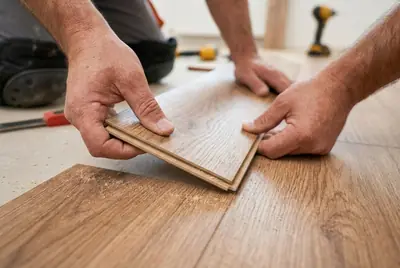
02
Planks angled, clicked and tapped home with staggered joints, so the sight line down the room stays dead straight.
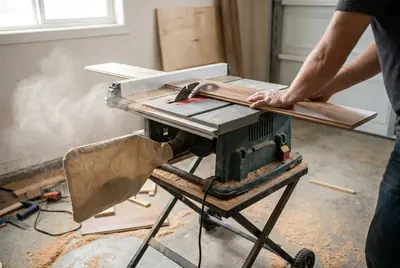
03
Door casings undercut so boards slide beneath, pipes ringed with collars, last rows ripped to width instead of forced.
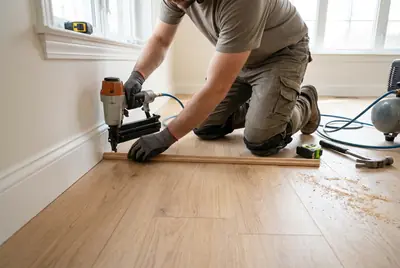
04
The expansion gap disappears behind clean trim, mitered at the corners and caulked where the wall waves.
05
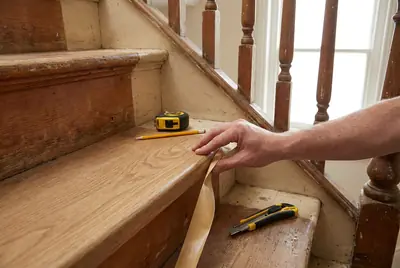
Tread and riser kits with proper nosing, glued and screwed, because a stair takes more abuse than any floor below it.
06
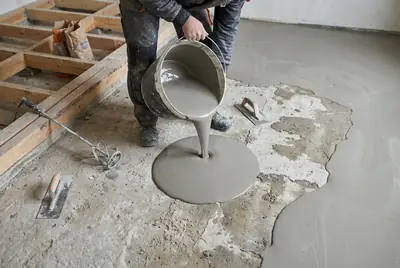
Grinding the high spots and pouring self-leveler into the low ones before a single plank leaves its box.
Laminate floats. It is not nailed and not glued, which is exactly why it goes down fast, and exactly why it copies every flaw underneath. A hollow click under your heel, a seam that opens by the window, a plank that rocks by the couch: nine times out of ten the story started below the boards.
So the level comes out before the saw does. We check flatness against the 3/16 inch in 10 feet rule, grind ridges, fill dips with self-leveling compound and let it cure. The underlay then earns its keep twice over, softening footfall sound for the room below and evening out what the compound did not catch.
The last quiet detail is the gap you will never see. Laminate grows and shrinks with the seasons, so every wall, pipe and doorway keeps a small expansion space, and long open stretches get a transition profile. Skip those and summer humidity will fold a hallway into a tent; leave them and the floor stays flat for decades. They are in every quote we write, not on the options list.
A fitter walks the rooms with a laser measure, checks the subfloor and leaves you a square-foot price on paper. No estimate ranges that grow later.
The planks acclimate in the rooms for about 48 hours while we pull the old covering and level whatever the laser flagged.
Underlay, film, then row after row, clicked tight and cut clean at every casing. Most single floors go down between breakfast and dinner.
Baseboards, thresholds, a vacuum pass and a walk through every room together. You keep the leftover planks for future repairs.
| Line item | Usual range | What sits inside it |
|---|---|---|
| Laminate installation, per sqft | $2.50 - $4.50 | Labor for click-lock laying with standard underlay included. |
| Old floor removal, per sqft | $0.60 - $1.50 | Carpet pulls out cheap; glued wood and tile sit at the top end. |
| Subfloor leveling, per sqft treated | $1.00 - $3.00 | Only the flagged low spots pay, never the whole room. |
| Stairs, per step | $45 - $95 | Tread, riser and nosing, fitted, glued and screwed. |
| Baseboard and quarter round, per linear foot | $2.00 - $4.00 | Supplied primed or color-matched to the boards. |
| Small-job minimum | $350 | Keeps a single hallway or one bedroom fair for both sides. |
The planks themselves ride on top of these figures and depend on the board you fall for; the written quote lists them on their own line, so you can swap styles without redoing the math.
Bedrooms, living rooms, hallways and home offices are laminate country, no caveats: warm looks, an AC rating matched to the traffic and a surface that forgives chair legs and dog claws better than the veneer floors it imitates.
Kitchens work well with a water-resistant board, sealed edges and a mat where the sink drips. Full bathrooms are the one room where we tap the brakes: daily steam and puddled water shorten any laminate's life, and we would rather point you to a different surface there than sell you a floor with a countdown on it. Powder rooms, with no tub in sight, are fine.
The moment the last plank clicks. A floating floor needs no glue to cure, so the couch returns the same evening and the bedroom sleeps in its own bed that night. Heavy aquariums and pianos get felt pads and a second pair of hands, not a waiting period.
Planks leave a cold warehouse and arrive in your heated rooms around Natural Bridge. Two days of acclimating lets them finish their expanding before they are locked together, instead of after, which is how gaps and peaks are born.
Usually, and it saves the demolition line on the quote. The grout lines disappear under the underlay if the tile is flat and sound. Over carpet the answer is always no; the padding flexes and the locks work themselves open.
We work room by room, shifting pieces to the finished side as the floor advances, so nobody rents a storage unit for a two-day job. Emptying closets and small breakables ahead of us is the one favor we ask.
No. A flat subfloor with an 8 mm AC4 board outlives a wavy one with 12 mm every time. Thickness buys sound and feel; the AC rating buys longevity; the leveling buys both. We spend your budget in that order.
You hand us the spare box we left behind. A click-lock floor unzips to the wounded plank and closes again, and a repair like that is an afternoon, not a renovation.
Terrain up here, coverage down there: every community a fitter reaches from this base is linked further down the page.
Somewhere under that carpet is a flat, quiet floor waiting to happen.
Price my floor