01
Underlayment and vapor film
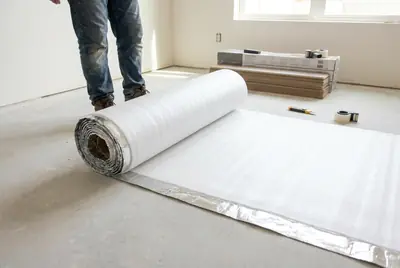
The quiet half of a quiet floor: foam or fiber underlay with taped seams, plus a moisture film wherever concrete sits below.

Our Penn Hills fitters level, lay and trim click-lock laminate across Allegheny County, and the square-foot price is on paper before the first box opens.
Measured square-foot quote, free, answered within one business day.
Do you want to update your worn-out boards without spending a fortune? Thankfully, modern interior upgrades let you achieve stunning results right away.
Most local property owners in our Allegheny County municipality need durable surfaces that withstand heavy foot traffic. Yet finding trustworthy hands for this labor can feel rather overwhelming.
Choosing synthetic wood planks gives your rooms absolute coziness while keeping your budget entirely intact. Plus, this clever material resists scratches from pets and kids with amazing ease.
Many neighbors in the 15235 ZIP code area worry about moisture damaging their foundation. Fortunately, multi-layered click-lock boards provide stellar water resistance for busy kitchens and damp basements.
Furthermore, locking planks snap together tightly to block dirt and spills from seeping underneath. This clever engineering ensures your living spaces stay exceptionally hygienic throughout every season.
Have you ever wondered what makes these modern surfaces so tough against daily wear? High-density fiberboard forms the strong core that prevents dents when heavy furniture rests upon it.
Additionally, a clear melamine wear layer protects the decorative image from fading under harsh sunlight. This smart construction guarantees your investment looks brand new for many decades ahead.
Before any boards go down, your base must be completely flat and dry. Skipping this crucial step invites annoying squeaks and uneven bumps later on.
Naturally, skilled local contractors check moisture levels using specialized meters before starting the project. This careful inspection saves you from costly repairs down the road.
Once the concrete or plywood base passes inspection, a foam underlayment rolls out smoothly. This hidden layer dampens sound vibrations and adds extra foot-softening relief.
Do you notice low spots across your current foundation boards? Pouring a self-leveling compound fills those annoying dips efficiently.
Eventually, the liquid cures into a rock-solid plane ready for the top layer. This tedious preparation guarantees your finished rooms look professionally polished.
Did you know your new boards need time to adjust to your indoor climate? Leaving unopened boxes inside your house for forty-eight hours prevents warping.
Consequently, the wood fibers expand or shrink to match your exact home humidity levels. This simple pause ensures a seamless fit once the hammering begins.
Now comes the exciting phase where your dull rooms transform dramatically. Professional installers start along the longest wall while leaving a small expansion gap.
By doing this, seasonal temperature shifts will never cause your floorboards to buckle. This smart technique keeps every single plank securely locked in its proper place.
Special tapping blocks and pull bars ensure each tongue fits snugly into the next groove. This meticulous attention to detail prevents unsightly gaps from forming over time.
How do pros handle tricky door jambs and floor vents without ruining the look? Undercutting the wooden door frames lets boards slide underneath seamlessly.
Alternatively, careful jigsaw cuts match every unique corner and register vent. This precision work delivers a custom finish that impresses every visiting guest.
Are quarter rounds and baseboards necessary after completing the main field? Installing matching trim pieces hides the mandatory expansion gaps cleanly.
Simultaneously, door thresholds bridge different room heights without creating tripping hazards. This harmonious blend creates true visual harmony throughout your entire interior.
Keeping your upgraded rooms spotless requires very little effort on your part. Regular sweeping with a soft-bristle broom removes abrasive grit before it can scratch.
Besides that, damp mopping with approved cleaners preserves the protective factory finish safely. This gentle maintenance routine extends the lifespan of your floors significantly.
Avoiding excessive standing water prevents moisture from swelling the core boards over time. This protective habit guarantees your rooms stay gorgeous through endless family gatherings.
Have you seen DIY projects ruined by improper installation methods? Using harsh steam cleaners on click-lock planks forces water right into the seams.
Instead, stick to manufacturer-recommended pH-neutral cleaning solutions for streak-free shine. This careful approach prevents premature deterioration and keeps your warranty fully valid.
Dragging heavy appliances across unprotected surfaces causes deep gouges in the top layer. Always use smooth sliders when moving refrigerators or heavy couches around your house.
| Material Type | Average Cost | Water Resistance | Lifespan |
|---|---|---|---|
| Synthetic Planks | Moderate | High | Twenty Years |
| Solid Hardwood | Expensive | Low | Fifty Years |
| Sheet Vinyl | Inexpensive | Very High | Ten Years |
Looking at this data helps you weigh your personal renovation priorities. Synthetic wood hits the sweet spot between long-term durability and upfront affordability.
In contrast, solid hardwood demands refinishing every few years to look decent. That demanding upkeep drives many local residents toward simpler surface solutions.
Meanwhile, cheap sheet vinyl often tears easily under heavy pet claws. Upgrading to rigid planks solves those frustrating durability issues once and for all.
Are you ready to revitalize your living areas with stunning new foot surfaces? Our dedicated local crew brings years of hands-on experience right to your doorstep.
With a median household income reflecting hardworking families, we respect your hard-earned dollars. That is why we provide transparent estimates with zero hidden fees attached.
Penn Hills, Pennsylvania hosts nearly forty-two thousand residents who deserve top-tier home improvements. You can join your satisfied neighbors by upgrading your property this season.
Do not let worn-out carpets drag down your interior decor any longer. Reach out right now to schedule your complimentary visit from our local flooring pros.
Simply request your FREE QUOTE today to kick off your home transformation project. Our friendly team will measure your rooms and present the best options available.
Every laminate plank carries an abrasion class. It says more about how the floor will age than the photo on the box does, so we quote with it, not around it.
| Rating | Where it belongs | What it takes in stride |
|---|---|---|
| AC3 | Bedrooms, closets, home offices with a chair mat | Everyday footsteps, furniture on felt pads, the vacuum on Sundays |
| AC4 | Living rooms, kitchens, hallways, stair landings | Kids, dogs, dropped keys, the daily route between couch and fridge |
| AC5 | Entryways, home businesses, rentals, busy stairs | Grit walked in from outside, rolling office chairs, tenants you never meet |
AC1 and AC2 exist too; we simply do not lay them, because the savings at the register come back as dull traffic lanes within a couple of years.
We install laminate all day, and it is still not the answer to every room. Here is the comparison we walk through at the kitchen table, with nothing rounded in our favor.
| Laminate | Vinyl plank | |
|---|---|---|
| Water | Modern boards shrug off spills that get wiped up; standing water at a leaky dishwasher is still its weak spot. | Fully waterproof through the core, which is why laundry rooms and full bathrooms lean vinyl. |
| Comfort and sound | Stiffer core, more solid underfoot, and quieter than its reputation once a proper underlay goes in. | Softer and warmer to bare feet, but thin planks telegraph every dip in the subfloor. |
| Price | More floor per dollar at the same thickness, and the realistic wood looks start cheaper. | Comparable at the low end; the rigid-core boards worth owning cost noticeably more. |
| Repair | A click-lock plank can be swapped; keep one spare box in the garage and a scratch is an afternoon fix. | Glued-down planks mean solvent and patience; click vinyl swaps much like laminate does. |
If your project reads vinyl after that table, we will say so during the measure and you keep the comparison for free.
01
The quiet half of a quiet floor: foam or fiber underlay with taped seams, plus a moisture film wherever concrete sits below.
02
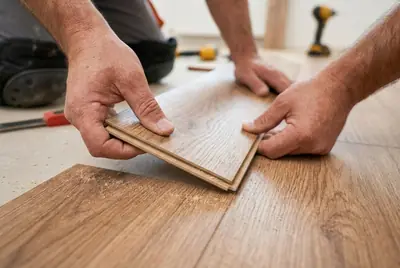
Planks angled, clicked and tapped home with staggered joints, so the sight line down the room stays dead straight.
03
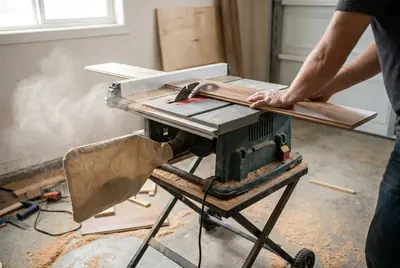
Door casings undercut so boards slide beneath, pipes ringed with collars, last rows ripped to width instead of forced.
04
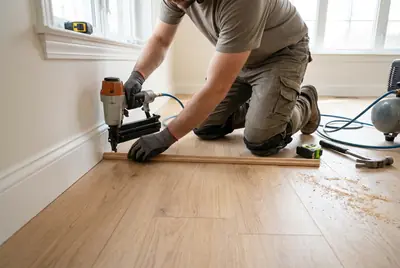
The expansion gap disappears behind clean trim, mitered at the corners and caulked where the wall waves.
05
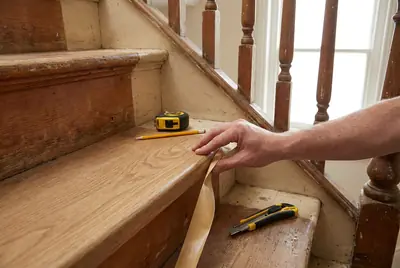
Tread and riser kits with proper nosing, glued and screwed, because a stair takes more abuse than any floor below it.
06
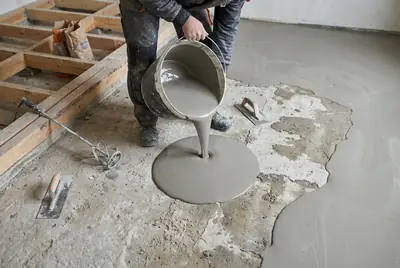
Grinding the high spots and pouring self-leveler into the low ones before a single plank leaves its box.
Laminate floats. It is not nailed and not glued, which is exactly why it goes down fast, and exactly why it copies every flaw underneath. A hollow click under your heel, a seam that opens by the window, a plank that rocks by the couch: nine times out of ten the story started below the boards.
So the level comes out before the saw does. We check flatness against the 3/16 inch in 10 feet rule, grind ridges, fill dips with self-leveling compound and let it cure. The underlay then earns its keep twice over, softening footfall sound for the room below and evening out what the compound did not catch.
The last quiet detail is the gap you will never see. Laminate grows and shrinks with the seasons, so every wall, pipe and doorway keeps a small expansion space, and long open stretches get a transition profile. Skip those and summer humidity will fold a hallway into a tent; leave them and the floor stays flat for decades. They are in every quote we write, not on the options list.
A fitter walks the rooms with a laser measure, checks the subfloor and leaves you a square-foot price on paper. No estimate ranges that grow later.
The planks acclimate in the rooms for about 48 hours while we pull the old covering and level whatever the laser flagged.
Underlay, film, then row after row, clicked tight and cut clean at every casing. Most single floors go down between breakfast and dinner.
Baseboards, thresholds, a vacuum pass and a walk through every room together. You keep the leftover planks for future repairs.
| Line item | Usual range | What sits inside it |
|---|---|---|
| Laminate installation, per sqft | $2.50 - $4.50 | Labor for click-lock laying with standard underlay included. |
| Old floor removal, per sqft | $0.60 - $1.50 | Carpet pulls out cheap; glued wood and tile sit at the top end. |
| Subfloor leveling, per sqft treated | $1.00 - $3.00 | Only the flagged low spots pay, never the whole room. |
| Stairs, per step | $45 - $95 | Tread, riser and nosing, fitted, glued and screwed. |
| Baseboard and quarter round, per linear foot | $2.00 - $4.00 | Supplied primed or color-matched to the boards. |
| Small-job minimum | $350 | Keeps a single hallway or one bedroom fair for both sides. |
The planks themselves ride on top of these figures and depend on the board you fall for; the written quote lists them on their own line, so you can swap styles without redoing the math.
Bedrooms, living rooms, hallways and home offices are laminate country, no caveats: warm looks, an AC rating matched to the traffic and a surface that forgives chair legs and dog claws better than the veneer floors it imitates.
Kitchens work well with a water-resistant board, sealed edges and a mat where the sink drips. Full bathrooms are the one room where we tap the brakes: daily steam and puddled water shorten any laminate's life, and we would rather point you to a different surface there than sell you a floor with a countdown on it. Powder rooms, with no tub in sight, are fine.
The moment the last plank clicks. A floating floor needs no glue to cure, so the couch returns the same evening and the bedroom sleeps in its own bed that night. Heavy aquariums and pianos get felt pads and a second pair of hands, not a waiting period.
Planks leave a cold warehouse and arrive in your heated rooms around Penn Hills. Two days of acclimating lets them finish their expanding before they are locked together, instead of after, which is how gaps and peaks are born.
Usually, and it saves the demolition line on the quote. The grout lines disappear under the underlay if the tile is flat and sound. Over carpet the answer is always no; the padding flexes and the locks work themselves open.
We work room by room, shifting pieces to the finished side as the floor advances, so nobody rents a storage unit for a two-day job. Emptying closets and small breakables ahead of us is the one favor we ask.
No. A flat subfloor with an 8 mm AC4 board outlives a wavy one with 12 mm every time. Thickness buys sound and feel; the AC rating buys longevity; the leveling buys both. We spend your budget in that order.
You hand us the spare box we left behind. A click-lock floor unzips to the wounded plank and closes again, and a repair like that is an afternoon, not a renovation.
Terrain up here, coverage down there: every community a fitter reaches from this base is linked further down the page.
Somewhere under that carpet is a flat, quiet floor waiting to happen.
Price my floor